
Just Desserts: Revenge & Merge
Century Games Innovation Pte. Ltd.Casual
4.9177.00 Reviews
- Version
- 1.9.1
- Installs
- 500.00K
- Age Rating
- Everyone
Screenshots


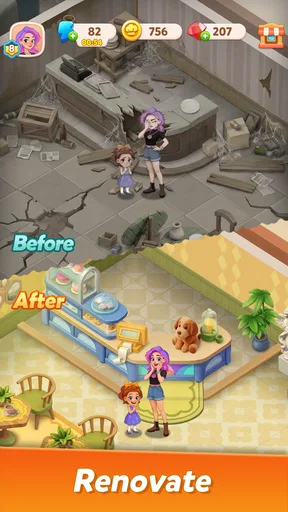

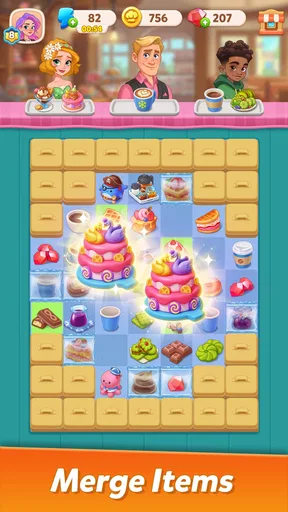
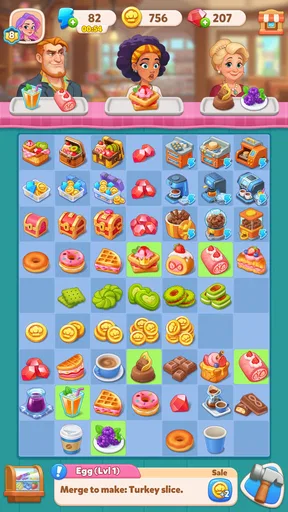
Our Review of Just Desserts: Revenge & Merge
 Analysis by Appyee
I spent time with Just Desserts: Revenge & Merge as the sort of casual game that can sit on a shared household device without demanding a long, uninterrupted session. Its central idea is easy to understand: combine matching items, use the results to move the story forward, and work toward a sweeter kind of payback. The theme gives the familiar merge format a little more personality than a plain puzzle board, while the relaxed pace makes it approachable for short breaks.
What I noticed first is how naturally it fits into everyday gaps. I could imagine opening it while waiting for dinner, handing the device to someone else for a few minutes, or returning to it after a busy afternoon without needing to remember a complicated control scheme. That simplicity is the main attraction, but it also sets the right expectations: this is a light, story-flavored casual game rather than a deep strategy title or a competitive multiplayer experience.
How it works on a shared household device
The basic loop is built around merging. You look over the available objects, combine compatible pieces, and make room for the next useful move. The satisfaction comes from turning several small items into something more valuable, then using that progress to support the revenge-themed journey. I found the rhythm comfortable because each action feels understandable, even when the board asks me to think about what to keep and what to combine.
That makes it suitable for a shared tablet or phone in a household where people take turns. One person can make a few merges, stop, and leave the device for someone else. The next player can usually recognize the immediate objective without needing a full explanation. I would still keep a clear sense of whose progress is being used, because a merge game rewards planning and an accidental tap can change the board in a way another player did not intend.
For a realistic example, imagine a parent using the game during a quiet coffee break while a child watches nearby. The adult can complete a couple of simple combinations, then let the child choose between two visible options. Later, the adult can continue from that position. This works best as informal turn-taking rather than a formal family mode: the appeal is that the game is easy to discuss together, not that it creates separate household profiles.
The most important shared-device rule is simple: agree who is playing before anyone starts tapping. Merge boards often depend on the order of actions, so a helpful-looking combination may actually use an item someone was saving. On a personal phone, that is only a minor annoyance. On a family device, it can become the difference between a satisfying session and an argument over lost progress.
The first sessions and what to watch
The opening experience is approachable because the game communicates its central action without requiring specialist knowledge. I did not need to study a long manual to understand the purpose of combining items. That makes it a reasonable choice for someone who enjoys gentle puzzle games but does not want a demanding tutorial or a complicated ruleset.
Still, “easy to start” does not mean every move is equally good. My useful habit was to pause before merging the first available pair and scan the rest of the board. A quick combination can clear space, but it may also consume an item that would have helped create a more valuable chain. In a short session, this small pause is enough to make the game feel more thoughtful without turning it into a serious calculation exercise.
I also found it helpful to treat empty space as a resource. The board is not only a place to store objects; it is the breathing room that lets future combinations happen. If I merged every possible pair immediately, I could leave myself with awkward leftovers. Saving one useful item for later may be better than chasing the first visible upgrade. That is one of the less obvious lessons that the short store summary does not communicate.
Keeping progress understandable between players
Shared use raises a practical question: how does one person know what another person was planning? The game itself is not a substitute for household coordination, so I would use a simple verbal handoff. Before putting the device away, say which items are being saved and what the next goal appears to be. That takes a few seconds and prevents the next player from treating every object as disposable.
This is particularly useful when the device belongs to more than one person. A child may see a matching pair and merge it immediately because the result looks rewarding. An adult may prefer to wait for a third item or preserve a particular space. Neither approach is automatically wrong, but they serve different play styles. Agreeing on whether the session is for experimentation or careful progress makes the game more pleasant for everyone.
I would also avoid beginning a shared session when someone is already in a hurry. The game is casual, but its board decisions can still benefit from attention. A rushed player may tap through choices quickly, while a second player may later feel that the board has become harder for no reason. The best household use is relaxed, short, and clearly handed over.
Boundaries, age context, and everyday suitability
Just Desserts: Revenge & Merge is free to start, which removes the biggest barrier for curious players. It is listed for Everyone, so its presentation is positioned for a broad audience rather than a narrowly adult one. I would still treat the age label as a starting point, not a complete household decision. The revenge theme is playful in context, but parents and guardians may reasonably want to see the tone themselves before deciding whether it suits a younger child.
The more important boundary for a shared device is spending. The game includes optional in-app purchases ranging from $0.99 to $99.99 per item. That is a wide enough range that I would not leave purchasing decisions vague, especially if children can access the same device. A clear household rule—no purchases without permission—is more useful than assuming everyone understands the difference between free play and optional paid items.
This is also where account boundaries matter. I would not assume that one person’s progress, purchase choices, or device settings should automatically be available to everyone else. If several people use the same phone or tablet, decide who owns the game session and who is allowed to make purchases. The game can be shared socially, but that does not mean every household member should have identical control over the device or its store account.
For a family, the safest approach is practical rather than complicated: keep the device’s normal purchase protections active, explain that the game can be played without buying something every time, and make sure younger players know to ask before confirming a payment. I am not presenting that as a special feature of the game; it is simply sensible management for any free-to-start title with optional purchases.
Who will enjoy the tone
The revenge framing gives the merging a reason to exist beyond decorating a board. I liked having a light narrative purpose behind the combinations, because it made the repeated actions feel connected. The tone remains casual rather than intense, so players looking for a dark or emotionally complex revenge story should adjust their expectations. This is playful motivation wrapped around a merge game, not a dramatic role-playing adventure.
It is a good match for people who like visible progress, tidy boards, and small decisions that add up over time. It can also work for someone who prefers games that are easy to explain to a friend or family member. A person who wants fast reflexes, demanding tactical battles, or direct competition may find it too gentle. The game’s strength is its accessibility, and that same accessibility limits how much mechanical depth it offers.
I would be cautious about recommending it to anyone who dislikes waiting for a board to develop or who becomes frustrated by limited space. Merge games can create tension through the need to choose what stays on the board, and this title is no exception. If your ideal casual game is an endless stream of immediate rewards with no need to plan, the occasional need to preserve space may feel like friction instead of fun.
Three habits that make the board easier to manage
Before making a merge, look for a possible chain rather than only the first matching pair. A small amount of patience can prevent you from using an item that would have completed a more useful combination later.
Leave a deliberate pocket of open space. It is tempting to fill every gap, but a crowded board makes new drops and future merges harder to organize. Space gives you options.
At the end of a shared session, explain the next intended move. This is especially valuable when another player may continue from the same board and does not know which objects were being saved.
These habits are not complicated, but they change the feel of the game. Instead of tapping every available match, I began treating each move as a small piece of housekeeping. That made the board calmer and reduced the number of moments where I had to recover from an impulsive decision.
Performance expectations and device fit
The game supports devices running Android 8.0 or later. That gives it a reasonably broad compatibility range for Android users, although compatibility on paper does not guarantee identical performance on every older phone. On a shared household device, I would pay attention to storage, battery condition, and whether the phone is already carrying many demanding apps. Casual gameplay is easier to enjoy when the device is not constantly struggling with background tasks.
The current version is 1.9.1, so I would use the normal app-store update process rather than relying on an old installation indefinitely. Updates can matter on a shared device because different household members may assume they are seeing the same experience. Keeping the installation current also avoids confusion when one person reports a screen or behavior that another person does not see.
On iOS, the practical questions are the same even though the stated minimum operating-system detail applies to Android: can the device run the game comfortably, is there enough free space, and who controls purchases? I would answer those household questions before handing the phone to a child. The game is free, but the device environment still deserves attention.
How it compares with other casual choices
Compared with a traditional match-three game, this title feels more focused on building upward through combinations and following a themed journey. Match-three alternatives are often better for quick, highly structured rounds where the objective changes from board to board. I would choose one of those when I want immediate puzzle pressure. I would choose this game when I want a slower sense of accumulation and a board I can revisit with a little planning.
Compared with idle games, it asks me to make more direct decisions. An idle game can be satisfying when I want progress to happen with minimal input, but it may not give the same feeling of personal control. Here, the order of merges and the use of space matter. The trade-off is that I need to pay attention; it is not as effortless as checking an idle title for a few seconds.
Compared with story-heavy casual adventures, the merge system is the clear center of attention. Players who mainly want dialogue, character development, or exploration may find the narrative layer too light. On the other hand, people who usually skip long story scenes may appreciate that the game gives the puzzle loop a theme without asking it to become a full adventure game.
That positioning makes the game easiest to recommend to a specific kind of player: someone who wants a friendly, low-pressure puzzle routine with a revenge-flavored setting, but who does not need competitive play or elaborate role-playing systems. If you are choosing for a household, it is also more conversation-friendly than a game that depends on fast reactions or private strategic information.
Where the free model changes the experience
The free price is a real advantage for trying the game, particularly when several people in a household are unsure whether they will enjoy it. Nobody has to commit money before understanding the merge loop. However, optional purchases mean the free experience should be treated as a complete trial, not as a promise that every shortcut or convenience will remain cost-free.
I recommend playing normally for a while before deciding whether any purchase is worthwhile. This reveals whether the basic pace suits you or whether you are only tempted because a board moment feels slow. For a shared device, that waiting period is even more useful: it lets the household decide whether the game is genuinely enjoyable before spending becomes part of the routine.
I would skip purchases entirely if the main appeal is simply having something pleasant to do for a few minutes. The core merge loop is the reason to install this game, and buying something should not be necessary to discover whether that loop fits your taste. Players who dislike optional spending prompts in free games may prefer a paid casual alternative with a clearer one-time cost, even if it offers less flexibility at the start.
My household verdict
After using it as a casual merge game rather than expecting a large adventure, I came away with a positive impression. Century Games Innovation Pte. Ltd. has built an approachable option for players who enjoy organizing a board, watching small combinations grow, and attaching that progress to a playful revenge theme. The average rating is 4.9 from around 9.8 thousand ratings, and its reach extends beyond a tiny niche with over 500 thousand installs, which fits the accessible character I experienced.
Those figures are useful context, but they do not remove the need to match the game with the right player. I would recommend it to a friend who wants a relaxed puzzle habit, especially if that friend likes sharing a device or discussing decisions with someone nearby. I would not recommend it to a player seeking intense competition, deep narrative choices, or a completely purchase-free environment.
The best way to use it at home is to establish boundaries before the first shared session: decide whose progress is being played, agree that merges should not be made on another person’s turn, and make the purchase rule explicit. With those basics in place, the game becomes an easy source of short, cooperative entertainment rather than a source of avoidable confusion.
For me, the final appeal is its balance of simplicity and modest planning. It asks little time, but it rewards not tapping blindly. That is enough to make Just Desserts: Revenge & Merge worth trying for casual players who want a friendly merge experience with a bit of story flavor. Just keep expectations—and household spending boundaries—clear from the beginning.
Verdict
Strengths of Just Desserts: Revenge & Merge
- Relaxing merge gameplay is easy to learn and suitable for short sessions.
- Story-driven mysteries add purpose beyond simply completing dessert orders.
- Dessert designs are colorful, charming, and appealing to casual players.
- Frequent tasks and rewards provide clear goals during progression.
- The game offers a cozy atmosphere with lighthearted characters and settings.
Limitations of Just Desserts: Revenge & Merge
- Energy limits can interrupt play when you want to continue merging.
- Some upgrades and story progress may require considerable patience.
- Repeated merging tasks can feel monotonous after extended sessions.
- Optional purchases may speed up progress and create pressure to spend.
- The small-screen interface can feel crowded during busy merge boards.
Other Releases by Century Games Innovation Pte. Ltd.
View All


Similar Picks in This Category
View All
My Talking Angela
Outfit7 Limited4.2

My Talking Tom
Outfit7 Limited4.3

Pou
Zakeh4.2

My Talking Tom 2: Pet Game
Outfit7 Limited4.3

Candy Crush Saga
King4.6

Bridge Race
Supersonic Studios LTD4.1
Frequently Asked Questions
What is Just Desserts: Revenge & Merge about?
Just Desserts: Revenge & Merge combines a casual merge puzzle with a story-driven restaurant makeover adventure. You merge matching ingredients and useful objects to complete orders, earn rewards, and help the characters rebuild their dessert business. As the plot develops, you uncover the reasons behind the restaurant’s troubles and make progress through different tasks, locations, and decorative improvements.
How does the merge gameplay work?
The main gameplay involves combining identical items on a board to create upgraded ingredients, tools, or dessert-related objects. These merged items are then used to fulfill customer requests and story objectives. Energy, available board space, and item generation are important, so it is usually better to plan combinations instead of merging everything immediately. Completing larger chains can provide more valuable rewards.
Is Just Desserts: Revenge & Merge free to download and play?
The game can generally be downloaded and played without an initial purchase, but it may include optional in-app purchases. These purchases can provide extra energy, boosters, currency, or other conveniences that help you progress faster. You can still enjoy the story and merge mechanics as a free player, although waiting periods and limited resources may make progress slower during longer play sessions.
Does the game require an internet connection?
An internet connection may be needed for certain features, including downloading game data, synchronizing progress, displaying advertisements, receiving events, and processing optional purchases. Some basic gameplay may work temporarily offline, but this can vary by device and game version. For the most reliable experience, especially when saving progress or accessing new content, it is recommended to play while connected to the internet.
Is Just Desserts: Revenge & Merge suitable for all players?
The game is designed for players who enjoy relaxed merge puzzles, light management elements, character-focused stories, and decorative progression. Its colorful presentation and straightforward controls make it accessible to casual players, while the energy system and gradual unlocking structure may appeal to those who prefer short, repeatable sessions. Parents should still review the listed age rating and in-app purchase settings before allowing children to play.
Play our best games!


